Bóg, Honor, Ojczyzna: Alfred Birkenmajer and the SPK Branch 20 Sztandar
By Janek Wielgosz
Jan 19, 2026
Listen To This Article
“Honor służby jest jak sztandar, z którym żołnierz rozstaje się wraz z życiem.”
Józef Piłsudski
“The honour of service is like military colours – a soldier relinquishes it only with his life.”
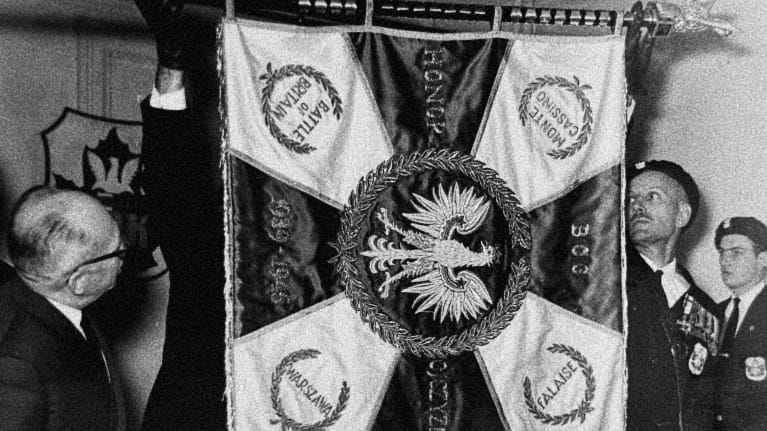
The Sztandar jednostki wojskowej, a military unit’s colours, is a sacred banner that embodies the love, loyalty, and dedication of the Polish soldier. Indeed, it is still the case in the Polish Armed Forces today that if a military unit loses its sztandar owing to weak fighting spirit, that unit is disbanded. In the case of SPK Branch 20, our sztandar is displayed proudly in our museum at 206 Beverley St. and is presented with honour at special functions and holidays.
The story behind Branch 20’s sztandar – and the man who conceived of it – is a perfect encapsulation of the ancient motto sewn into its stripes: Bóg, Honor, Ojczyzna – God, Honour, and the Homeland.
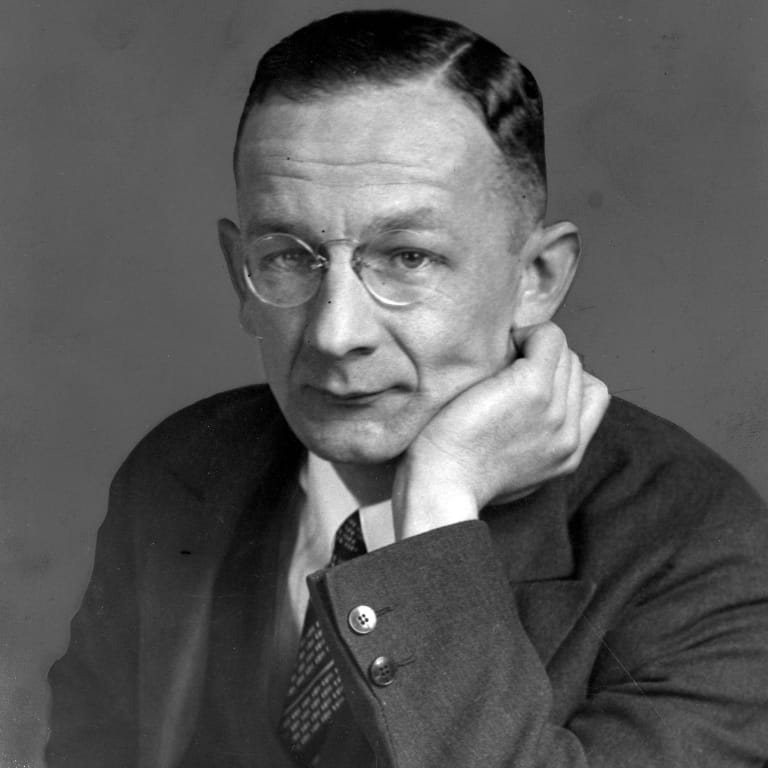
Alfred Józef Birkenmajer (1893-1977) served in myriad roles over his 85 years of life. As a graduate of the Academy of Fine Arts in Kraków, where he qualified as a graphic artist and draftsman, Alfred was a great proponent of protecting Polish culture and identity through arts and literature. He created beautifully intricate bookplates (ex libris) and other literary publications during his time in interwar Poland. After settling in Toronto in the early 1950s, Alfred immersed himself in the émigré art scene. He worked as a graphic artist, art conservator, and interior designer, and frequently exhibited his work alongside artists like Eugeniusz Chruścicki, a fellow Polish veteran who painted the treasured wall-sized tapestries in the dining room of the Polish Combatants’ Hall.
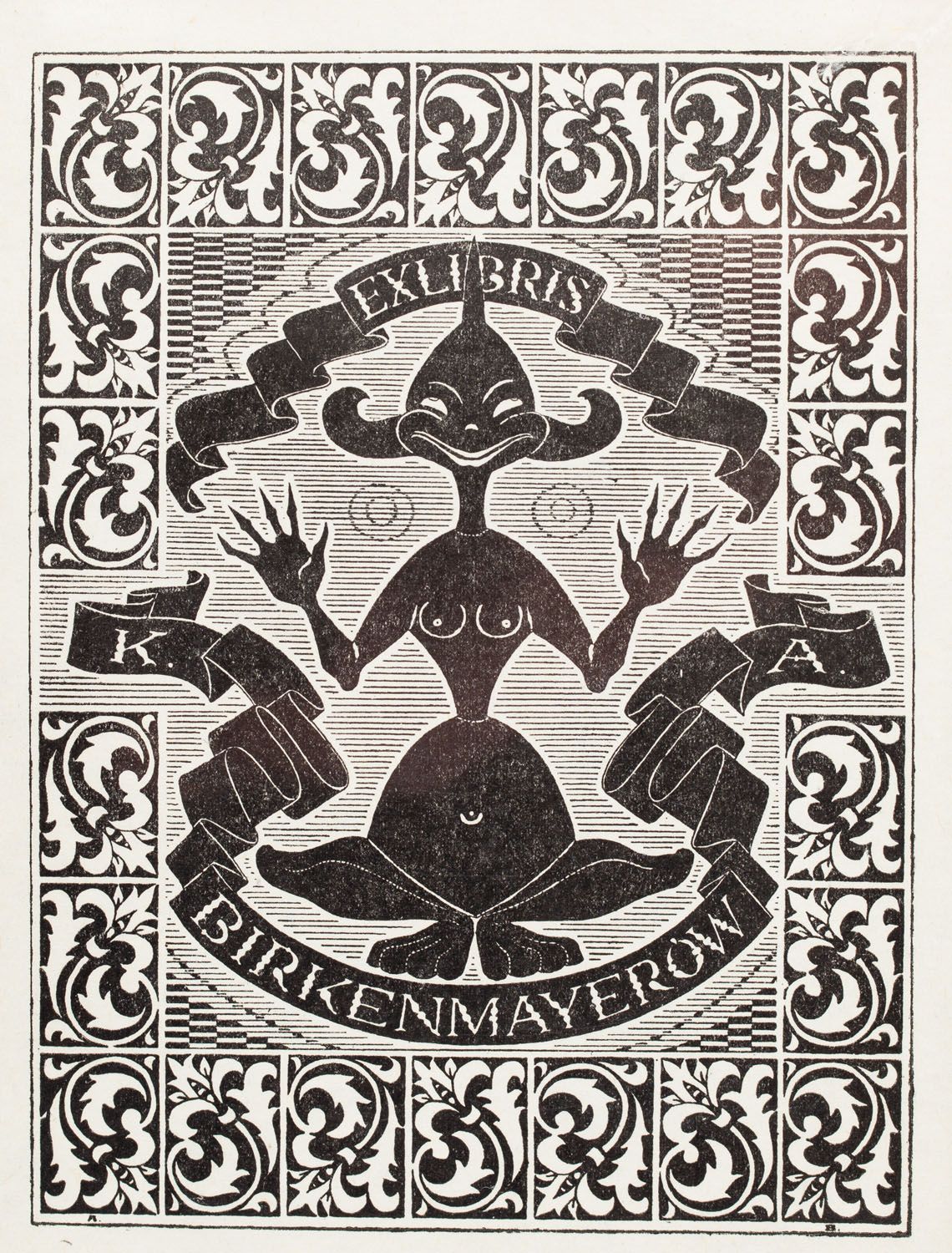
Alfred Birkenmajer’s personal Ex Libris (bookplate), circa 1930
Alfred was also a courageous patriot who fought in both the First and Second World Wars. In 1914, he was conscripted into the 13th Infantry Regiment of the Austro-Hungarian army. Not content to serve under a foreign power, Alfred deserted his post in 1915 and joined the Polish Legions, serving initially in the 1st Artillery Regiment and later as an underground operative in the Polish Military Organization.
When Poland won back her independence in 1918, Alfred took up the patriotic cause – taking part in the Third Silesian Uprising in 1921 and later holding a military intelligence posting in Berlin from 1923–1925. Shuttling between civilian and military roles during the interwar period, he was pulled back into active service in Fall 1939 at the outbreak of World War Two. Evacuating westward ahead of the advancing German forces, Alfred took up a posting in Tangier, Morocco, facilitating evacuation routes for Polish officers fleeing France. Later, under the pseudonym ‘Burmistrz’, he took command of the intelligence station in Casablanca, working under the cover of the director of the Polish Red Cross in that city.
In 1941, Alfred’s cover was blown and he was arrested by local police loyal to the French Nazi collaborationist Vichy regime. Charged with spying for Great Britain, he was imprisoned for 7.5 months for illegal possession of radio equipment (his deeper intelligence activities could not be proved). Upon his release, Alfred made his way through Morocco and managed to obtain a visa to Ottawa, Canada, where he headed the ‘Manchester’ intelligence station until the end of the war.
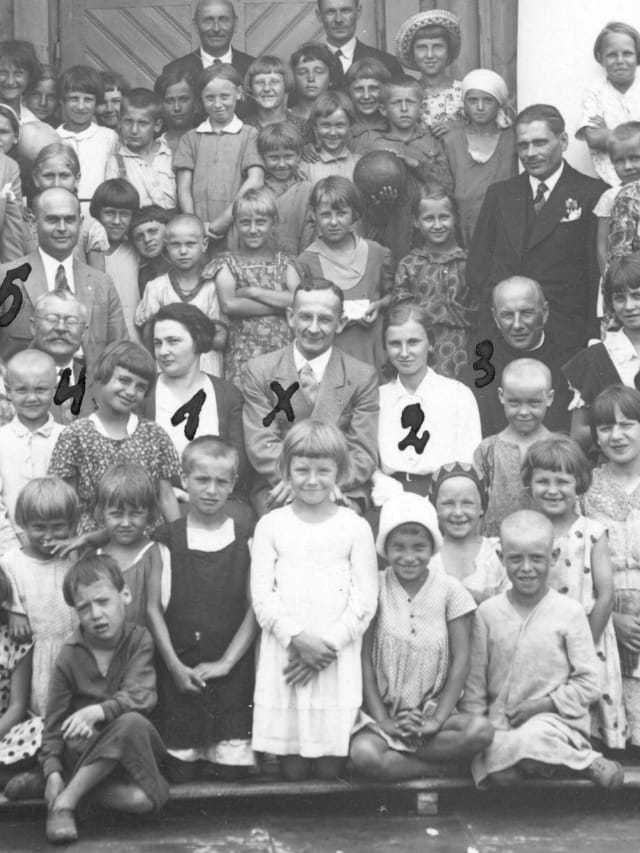
Alfred (centre) as a member of the Sejm visits a summer camp for underprivileged children, 1934.
In addition to his valorous military service, Alfred was also a statesman and civic leader in his homeland, serving as an elected member of the Polish Parliament (Sejm) from 1930-1935 as well as editor-in-chief of a military newspaper and a foreign correspondent for Polskie Radio.
In postwar life in Canada, he continued his civic involvement working with the International Institute of Metropolitan Toronto – an organization that provided support services to new immigrants to the Toronto area – as well as the Polish Combatants’ Association of Canada, a mutual-aid organization of Polish veterans.
By the mid-1960s, Alfred was the oldest member of SPK Branch 20 in Toronto. His artistic talents, military record, and spirit of civic service made him the ideal man to design Branch 20’s new sztandar. At a special ceremony in November 1965, the sztandar – proudly displayed with its wood staff full of gold and silver studs – was blessed and entrusted to the care of our members. Over 60 years later, the SPK Branch 20 sztandar remains a symbol of the sacrifices of Alfred and countless other Polish veterans who fought ‘for your freedom, and ours’.
Sources:
Budzik, Justyna. “Bronka Michałowska: A Life in Art.” The Polish Review 65, no. 3 (2020): 57–64.
Soltys, Edward. Road to Freedom, 1946–1996. January 1, 1997.
Szrodt, Katarzyna. “Powojenna emigracja polskich artystów do Kanady — rozwój życia artystycznego w nowej rzeczywistości w latach 40. i 50. XX wieku (zarys problematyki w świetle prasy kanadyjskiej).” Archiwum Emigracji: Studia – Szkice – Dokumenty, no. 1–2 (12–13). Toruń, 2010.
Sztandar jednostki wojskowej. Wojsko Polskie. https://www.wojsko-polskie.pl/sztandar-jw/
“Alfred Birkenmayer.” Wikipedia, Polish edition. https://pl.wikipedia.org/wiki/Alfred_Birkenmayer
Smyrgała, Dominik. “Wygnani na zachodnią półkulę.” Przystanek Historia, August 3, 2024.
https://przystanekhistoria.pl/pa2/teksty/102711,Wygnani-na-zachodnia-polkule.html